
by Alex Wells
If you’re reading this you’re probably a person that reads, there’s a good chance you might be a person that writes, you might be a person that might have a degree in the humanities, who likes music that’s hard to find, who knows about now-popular things before they are popular, a person that likes things we might have once called “underground” or at least “alternative”.
And you may have noticed that even in your own circles, popularity is a killshot. If you see an argument for the goodness or the badness of a song, a book, a show, a work of art, the fact that people like it is brought out—even in hip and literate circles—as evidence that it is good. Only the old, the too-nerdy, or the “weird” (now always a bad word) to rail against popular things.
This isn’t that strange—we do live in a democracy and all—but it did not used to be the case. In culturally savvy circles the fact evvvveryone liked something was evidence it was trash, or at least something to be guiltily consumed. What changed?
The nature of the counterculture—or our perception of it—is what changed. The pre-eminent countercultural figure of the 60s through the 90s was a straight white man who took on other, more powerful white men by being cleverer, more talented, more streetwise or more talented than his wealthy counterparts. The pre-eminent countercultural figure now is a woman, and/or queer, and/or of-color—and the challenge they pose is more complex. There is the challenge raw demographics—there are many marginalized people and they have been ignored a long time—but there is also an economic power that grows from that: those who are not white straight cis men buy a lot more concert tickets, clothing, and everything else than those who are. They use social media more and are better at exploiting it. When this strength of numbers is on your side, why not lean into it? If you’re the underdog, why not roast anyone into anything you’re not for their irrelevance?
The conservative enemy of the hip art-loving counterculture used to be pictured as a 1950s mom and dad, normals inflicting traditions and norms on rebellious children. The enemy is now pictured as a group of pale, poorly-dressed, white techbros and male politicians, wealthy for no good reason—arrayed against fabulously-dressed, gay-icon pop-stars who are wealthy for the reasons anyone who has ever sang into a hairdryer in the mirror can relate to.
The new counterculture is less likely to renounce commodities or comforts and more likely to demand access and representation. They don’t want an end to power, they want a share in it. One could say this has always been true of most marginalized people—it’s just now their bohemian division agrees with them.
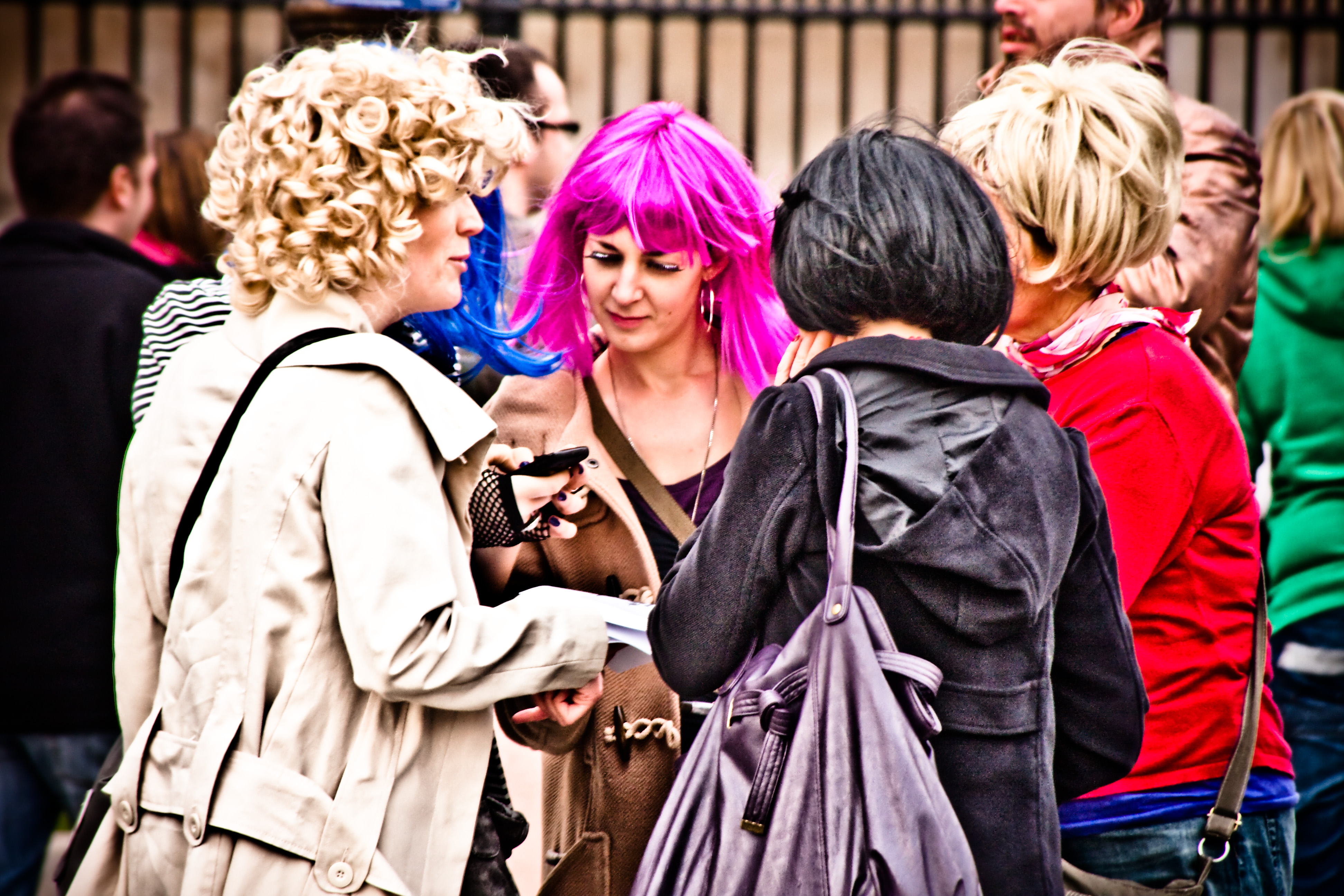
IMAGE: Group with wigs. Creator: Garry Knight, Copyright (c) Garry Knight