
by Alex Wells
While pushing through the Roosevelt Hotel’s bungalow hallway last week at the Felix Fair I heard a dealer say “We haven’t sold a thing this year!”. He said it loudly and quite openly in front of the entire hallway churn. While the dealers I ate lunch with afterward could only shake their heads at their colleague’s lack of discretion, they couldn’t deny his assessment. They all grumblingly agreed that the market is down and has been for a long time.
One (a Jewish one) opined that her sales had been plunged at the beginning of the recent troubles in Palestine and hadn’t recovered since. The others (Jewish and not) agreed. They had clearly already done the math.
While catastrophic world events affect the art market as much as the rest of the economy, this—they all seemed to agree—was different. Collectors can be talked out of a spending mood by intimations of doom, but usually not for so long. What seems to be happening is deeper—a split between the values of the collecting class and the creative classes they patronize.
It’s no secret that the Gaza situation has, on several occasions, driven wedges between the art world’s money and mouth respectively—the firing of David Velasco from Artforum being only the most prominent of many examples. Since at least the 1960s, what might be called the “art world coalition” has sheltered everyone from purple-haired students to wizened museum board-members under a fragile umbrella of vaguely-defined anti-conservative sentiment that could be wielded against obvious targets like censorship, racism, Nixon, W and Trump but which could prove fragile when weaponized into institutional critique. While they do share cosmopolitan values, artists and art writers, being urban freelancers in an unpredictable economy, tend to be raging leftists—especially in their youth, whereas collectors and owners of cultural institutions (by definition rich and almost always old) tend to stay in the center lane. Palestine—the dealers at the lunch table agreed—has exposed this faultline like no other issue and relationships have suffered.
Even when artists aren’t leaving galleries and signing (or forced to un-sign) petitions, the general sense of easy identification of collector with young artist is sorely tested when the divide between them is marked with words like “genocide”. For at least a decade the collecting and curating classes have strived to define themselves against the worst billionaires on the other team by more aggressively collecting young artists that aren’t white, aren’t men, aren’t straight or are some mixture of the three—but the fiction of representing themselves through their collections is more difficult to sustain when every other artist in it is telling them they have blood on their hands.
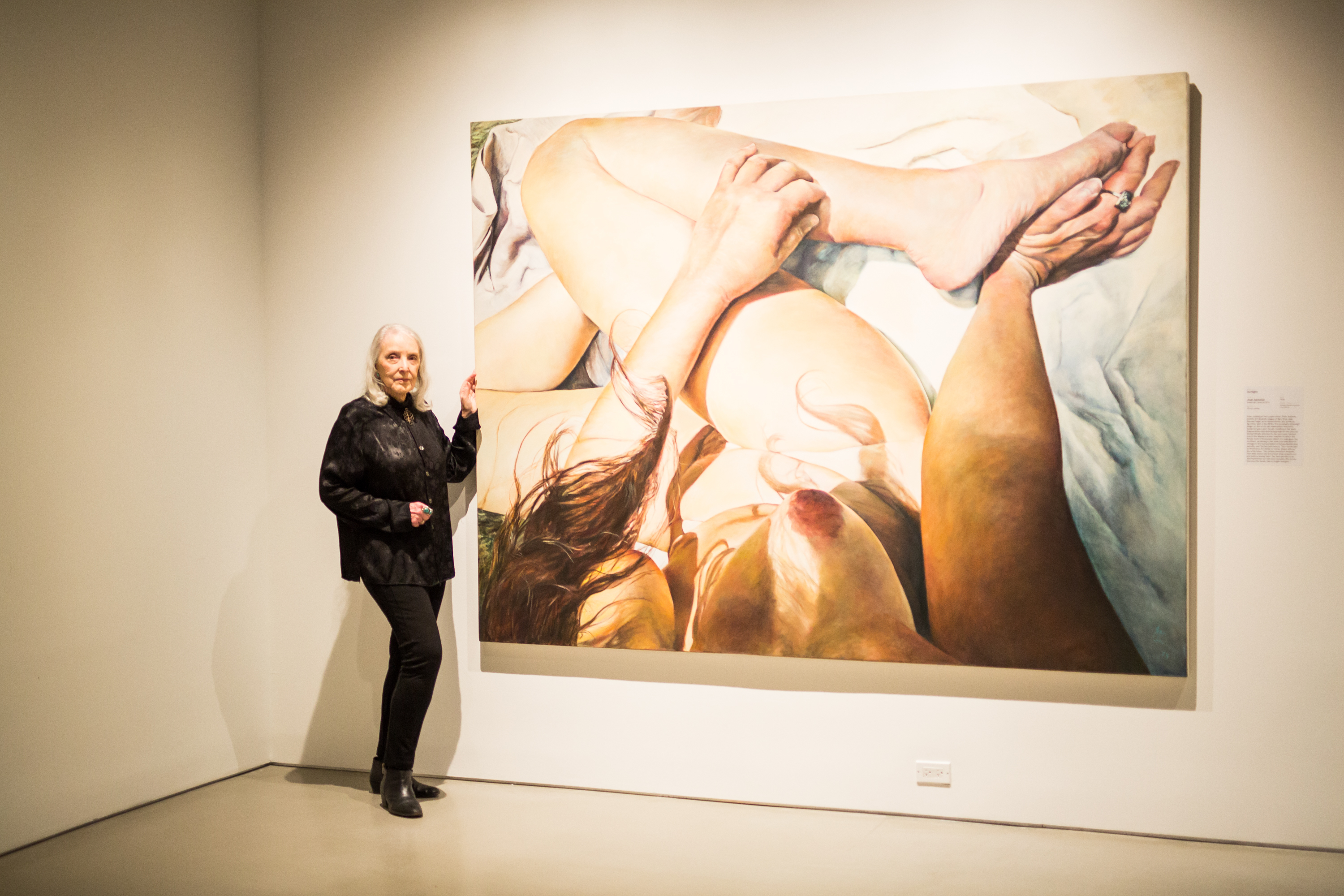
Recent trends in curation—signaled by developments like the resurgence of Joan Semmel, Jack Whitten at Hauser and Wirth, and Alice Coltrane at the Hammer—suggests a new solution is being devised. Rather than supporting young firebrands who might oppose their values, collectors have increasingly shown interest in rediscovering artists from decades past who were previously ignored by the process of canonization. This allows them to wear the badge of respect for liberal values using only artists who are too dead or too bone-tired of being ignored to risk their careers by demanding anyone help free Palestine.
Image: Joan Semmel. The Jewish Museum TheJewishMuseum.org. Photo by Sara Wasserman.