
by Alex Wells
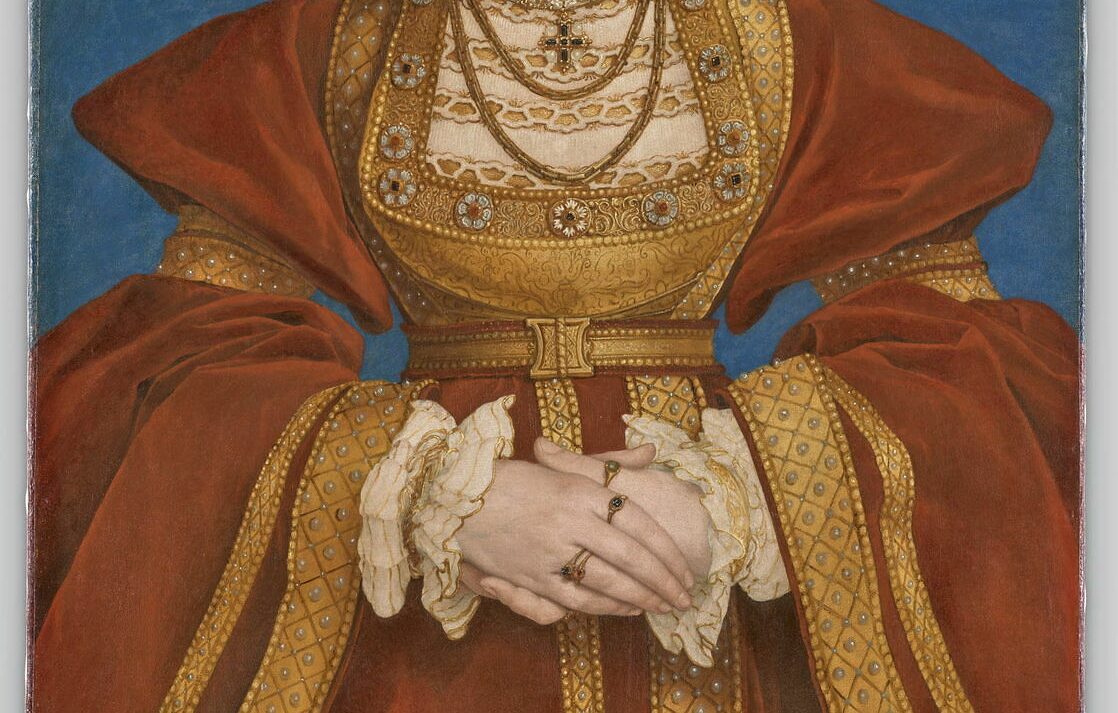
According to Art History News the Louvre has cleaned Hans Holbein’s Anne of Cleves. The Louvre’s website documents the painting’s day-to-night like transformation.
The new image is crisp and intense, with an almost John Curran modernity and a powerful sense of presence, but in one contest it falls flat while the unclean version sails past the finish line. The old one looks much more like my grandmother’s living room, which I shared for three years in high school. The faded barbecue red, the rotten-egg marigold and filthy scummy blue? I can see my nana stretching her hand toward the paint chips approvingly. This is what calm and luxury looked like to her: old oil, caked with chimney soot.
I sat on the uncomfortable nap the color of that dress, doing my homework by the light of lamps the color of its trim, closing velvet curtains made intentionally in that dark wannabe blue (or is it green?). It was disgusting and it was how all mid-century middle-class homes looked from 1910 to 1965 when they weren’t trying to look like captain’s cabins or exemplars of modern geometry. My grandmother lived in a world of musty florals and sad-sack curlicue textures that extended out of her house into fashion, furniture design, graphic design, industrial design and theatre. Customers wanted things to look this way. I have long held that one reason that no matter how many black and white photos I see of her in decaying leather albums I still cannot picture my grandmother young in that house. She was just born old.
My nana had a lifelong obsession with going to Paris which never came to fruition. When she was alive I never understood it, but now, looking at the sparkling Holbein paired with its penumbral twin I get it. Paradise to grandma was well and truly the color of Parisian dirt.
IMAGE: Louvre