
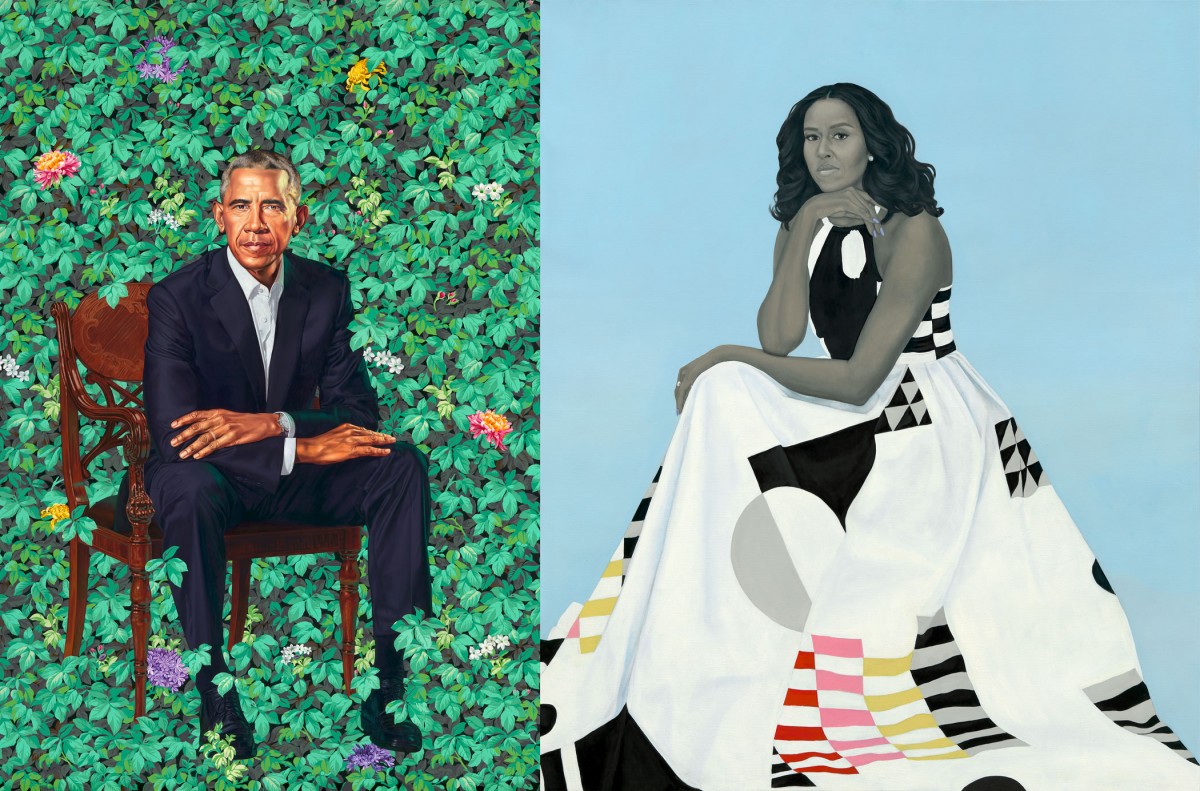
by Alex Wells
Is it fair to say the art world was “rocked” by mid-May’s revelation that Kehinde Wiley—creator of Barack Obama’s presidential portrait and countless similar portraits of black subjects on patterned backgrounds—had been accused of sexual assault? Judging by reactions on social media it was clear that many of his younger and less-insidery fans were indeed rocked, but in the frenzy of googling that followed the accusations another concern also emerged. A tweet “Black Femme Lesbian” artist QlownBrat echoes a common sentiment:
“Finding out Kehinde Wiley is an alleged sexual predator is breaking my heart 😭 I was inspired by so much of his work. Apparently it’s an open secret that he harms people??? And doesn’t even paint all of his work? I’m so sick.”
The ins-and-outs of sexual assault allegations against creators have been extensively thinkpieced, but the issue of how much creating these creators even did is increasingly to the fore.
Within the cloistered confines of the art world the fact that Wiley and other blue-chip painters don’t always hold their own brush has been justified in the past with an urbane shrug and a line about how “Rubens had assistants”, but the idea is still shocking and alienating to the crossover crowd that first became aware of Wiley when he began painting (or asking his assistants to paint) portraits of the rich and famous. Moreover, anyone paying attention over the last decade will be aware that sexual assault allegations throw all conventional wisdom about a creator’s work into question in the public mind—and methods and themes that once went unremarked are almost immediately deemed problematic when in the hands of an accused artist.
On an adjacent front, a recent piece in Vulture detailed a court case which ended with appropriation artist Richard Prince paying $450,000 to photographer Eric McNatt after Prince made and showed a piece that mostly comprised of a photograph by Eric McNatt. McNatt’s portrait of Sonic Youth’s Kim Gordon appeared alongside other third-parties’ photos of luminaries like Laurie Simmons, random Suicidegirls and Jean-Michel Basquiat for a show Jerry Saltz once praised as “genius trolling”.
Like Wiley, Prince’s work has long been defended by art world insiders using a standard justification: Warhol used images in public circulation, that was the whole point—it’s a critique of advertising or consumerism or something. But this was apparently not a justification that Prince was willing to put in front of a jury. Would such ideas even make sense when the average jury member is less likely to see “somebody’s image above your joke” as an avant-garde art strategy than as a mundane fact of life on Facebook? Describing the potential trial, Vulture’s Choire Sicha notes:
“Gordon was on the witness list. Wealthy art collectors and dealers would parade in. Prince would likely not testify, which was, for him, for the best: When he speaks, he sounds like the very stereotype of the careless, elitist, marauding artist.”
A larger question is whether the worm is beginning to turn against contemporary artists who don’t much make things? With billionaires and tech “visionaries” whose work consists largely of pointing at problems for others to fix increasingly being painted as the pre-eminent villains of the modern age in film and on social media, can the image of the contemporary artist as a light-fingered dandy remain benign? With artists, intellectuals and even celebrities on the level of Scarlett Johansson doing everything they can to keep the genie of AI in the bottle, are artist’s-hand-removing strategies which seemed clever, edgy and futuristic in the mid-20th century going to look to younger tastemakers just like cringey fat-cats avoiding work? We can only hope.
IMAGE: Obama Portraits by Kehinde Wiley