
by Anne Gabriel
There is a definite strength of opinion from the old guard that the art world should be boring and repetitive. Oh, they don’t know that they think this way—but they do. They are stuck in the bad taste hyperloop of abstract expressionism (mostly created by white males who I’m sure are also surfers) / minimalism (also typically created by white guys, but in severe button up shirts) / conceptual art (normally also created by men in short 1980s haircuts)— because inside of the old guard where those paths intersect—at the edge of lots of white space and 30 decades of repetition—equates (in their brains) to good taste—and they couldn’t be further from the truth.
Abstract expressionism / minimalism / conceptual art have been the safe and standard practice in the art world for decades. It’s not new. It’s not avant garde. It’s Billy Joel played on repeat—nothing harmful, pleasant enough, and nowhere near shocking or discomfort.
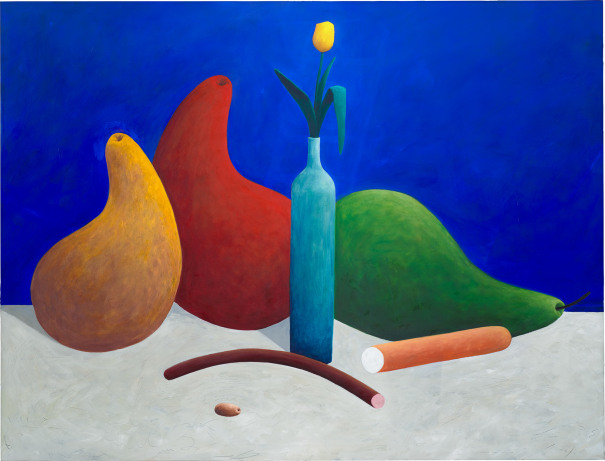
A simple google search of the top selling contemporary artists provides a pretty good list of what I mean. Mark Grotjahn with his scribbles and stripes is the most boring abstract expressionism I’ve ever seen. Nicolas Party’s creates large landscape paintings out of abstracted blocks of color which look like he stole his best ideas out of illustrated children’s books from the early 90s, and Rafik Anadol’s digital works are just giant boring screen savers—all are top selling artists – and all of them are creating work that is some combination of product that people have seen before and are used to. Boring.
White walls.
Lots of curation of safe art that can be hung behind couches easily—or in hallways. If it’s abstract, you don’t have to know what it is—in fact its better you don’t, lest it be offensive.
Conventional openings with wine and crackers.
Conventional gallery directors in layers of various shades of white and beige.
Conventional places of congregation—art fair booths and back rooms.
It feels right because it feels safe and it feels safe because it feels familiar—because the art world has been doing it the same way for decades.
So where is the avant garde? Where is the artworld that is pushing boundaries? Not in the galleries—at least not in most of the major galleries—not just yet—and not really in most artist’s studios either.
Art and artists and their gallerists were once the de facto experts of the avant garde. They were the muses of the fashion world and the design world. They were the ones looked at for setting trends and styles and taste and for pushing established taste levels.
Now, they’re not.
I’d like to attribute this shift to fear—fear of slowing art sales, fear of making a living for both the gallery and the artists. Fear that if the art and the artist and the gallery isn’t boring—then they may be offensive or off putting and then both may lose out on a chance of making a sale. The economics of regular, safe, and boring choices is real.
However, recently, I’ve seen inklings of it. In corners, in shadows. People are ready to get rid of the white. You can see it in the material explorations of Roksana Pirouzmand’s disconnected ceramic body pieces that drip water, Genevieve Gaignard’s maximalist self portraits set on a background of british tea-cup inspired flora hung under fluffs of cotton clouds affixed to the wall or in artists coming out of South America who don’t have the same commercialization history of major metropolitan US cities and instead must make art that is good in order to contend on an international level.
So maybe that’s it. Maybe, I’m just so tired of seeing boring commercial American art—and I wish the gallerists and the old guard were as fed up as I am.
Image: Unattributed