
by Anne Gabriel
There used to be a distinction between fine art, by which I mean art that you place on your walls or on your shelves, and functional art, by which I mean art that you sit on and or use in some way. Although that distinction among sellers of both kinds of work has pretty much remained–the fabrication techniques of functional art have jumped over the bridge and seem destined to remain in the fine art realm for the foreseeable future.
Two exhibitions at Night Gallery, Los Angeles, seem intent on displaying the process of machine fabrication as art.
In Night Gallery’s main space, Reza Aramash exhibits several marble sculptures of body parts–each sculpture includes ultra-fine detail like the rendering of delicate folds of paper or fabric being grasped by a hand or the crinkling of underwear on a fragmented torso. The didactics mention the pieces are of carved and hand-polished marble–but nowhere does it mention that the marble is hand carved–for it is not. This is work that a 3d cnc machine has seemingly made and not a sculpture virtuoso–but I think that’s the point. The sculptures weren’t special or highly unusual in any kind of way (apart from a lot of detail) but would have take a sculptor time and labor and most likely the better part of a year to produce. But why should an artist do that, when a machine can just create it?
What is on display here is machine fabrication as craft or art–but I would not call machine fabricated works of classical motifs great fine art–Walmart has the same thing in resin and plastic–maybe not holding a tissue or with crinkled underwear but I’m pretty confident I can order a resin depiction of a hand and arm on their website. Is the argument then that machine fabricated work is fine art as long as the material is expensive? That it is fabricated in marble just makes the gallery a higher-end Walmart. Is this the Warholian point? Does it need to be made again?
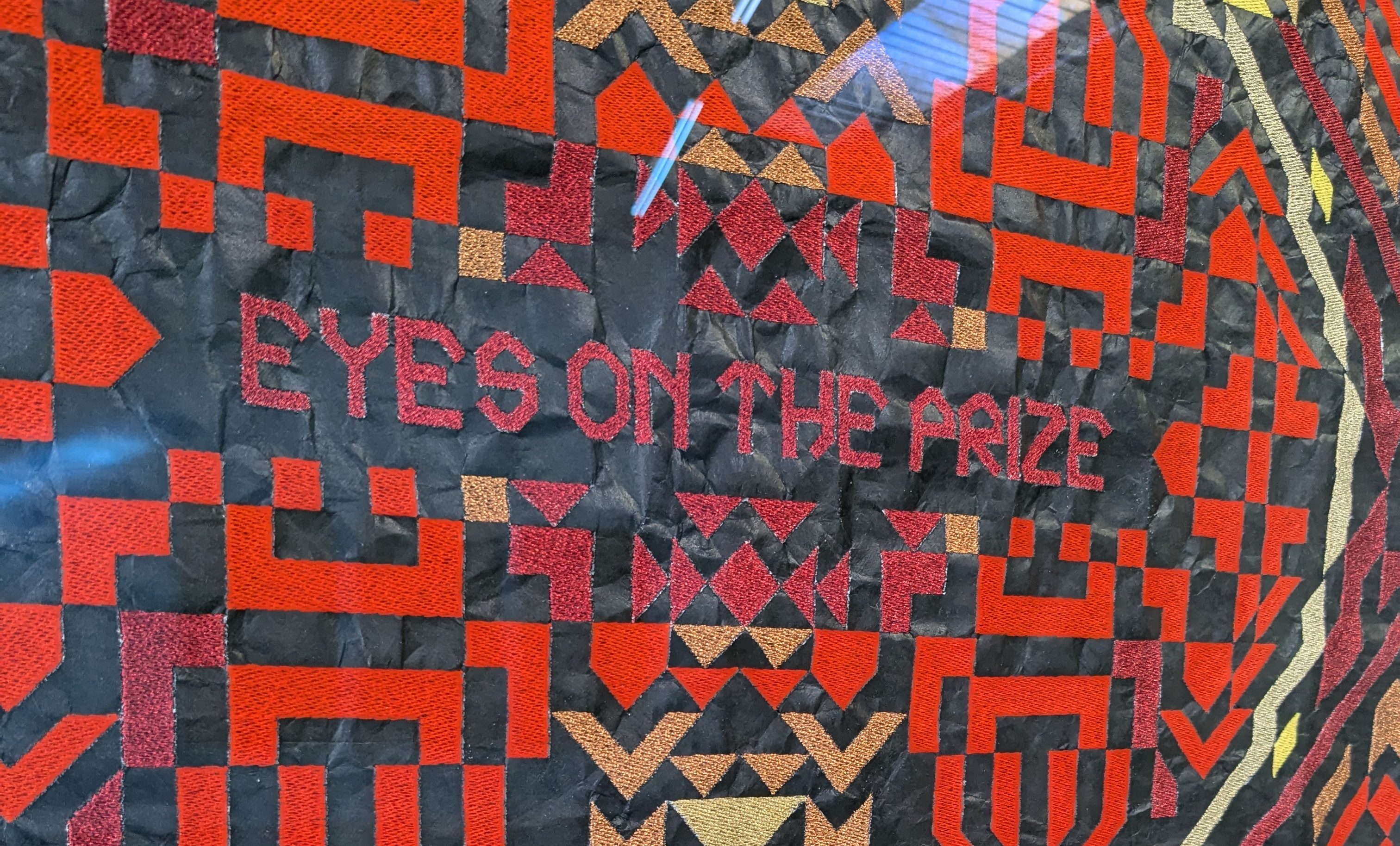
In Night Gallery’s Sidecar space, a separate building in the same Night Gallery complex, the elevation of fabrication continues in a two person exhibition with Caroline Monnet and Renee Condo. The exhibition is centered on craft and pattern with half of the exhibition devoted to large panels created by wooden beads glued to a substrate (which seemed as if they were hand-created) and the other portion of the show exhibiting embroidery works on various unconventional materials such as vinyl, insulation foam and tarp–such intricate, detailed, and excruciatingly straight pattern embroidered work with such a large-gauge needle could only have been done with a computer-run industrial embroidering machine.
The patterns are fun and full of color but not anything especially interesting or new. Patterns in rugs, quilts, fabrics, baskets are inherently more interesting when you believe a person has made them by hand and become monumentally less so when you realize the patterns were printed by machine–because again you can just buy the latter stuff at Walmart. The few sayings embroidered on the substrates “Less Me More We” and “Eyes On The Prize” sum it up perfectly–less art, more product. All it provokes is the same question again–is this more Warholianism or simply less thought?
Image: Staff